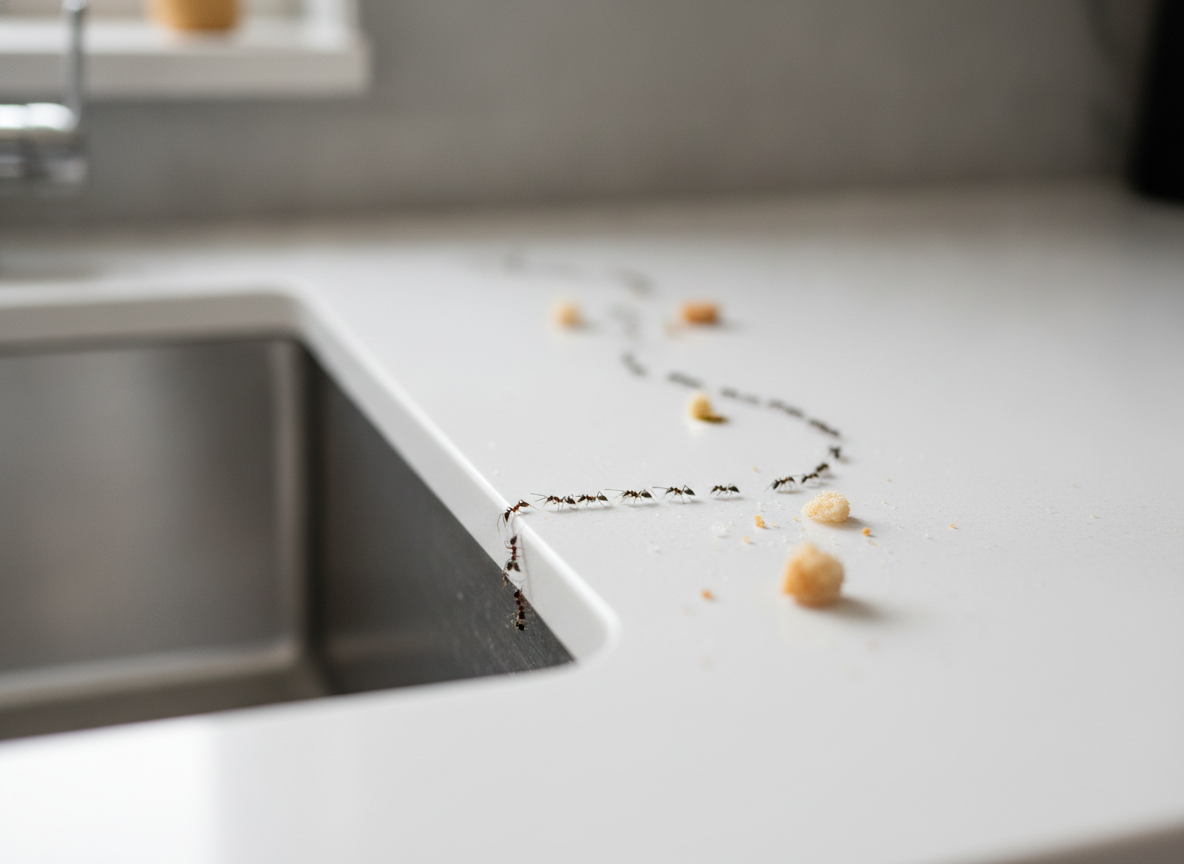
If you've noticed a line of tiny black ants marching across your kitchen worktop, you're not alone. Ants in the kitchen are one of the most common pest complaints we deal with across Crawley and West Sussex — especially between May and September when ant activity peaks. Here's why they're there, what you can do about it, and when it's time to call a professional.
Quick summary
- ✓Black garden ants are the most common kitchen ant in Crawley
- ✓They're foraging for sweet foods, water and protein
- ✓Shop-bought sprays kill visible ants but don't reach the colony
- ✓Sealing entry points and removing food sources helps reduce activity
- ✓Professional ant treatment targets the nest — not just the workers
Why are there ants in my kitchen?
The ants you're seeing are almost certainly black garden ants (Lasius niger) — the most common ant species in UK homes. They don't live indoors. Their nest is outside, usually under paving, in garden borders, beneath patios or in lawns. The ants you see in your kitchen are worker ants — scouts sent out to find food and bring it back to the colony.
They're attracted to three things:
- ✓Sweet foods — sugar, honey, jam, fruit juice, fizzy drink residue
- ✓Protein — pet food, crumbs, grease, food waste
- ✓Water — dripping taps, condensation around sinks, damp areas
Once a scout ant finds a food source, it lays a pheromone trail back to the nest. Other workers follow this trail, which is why you see ants marching in a line — they're all following the same chemical path. Even after you wipe the surface, the trail can persist unless properly cleaned.
Where are ants getting into my kitchen?
Ants are tiny and can squeeze through surprisingly small gaps. In Crawley homes, the most common entry points we find are:
- ✓Gaps around door frames — especially back doors and patio doors
- ✓Cracks in window seals or where the frame meets the wall
- ✓Gaps around pipes under the kitchen sink
- ✓Where utility cables or pipes enter the property
- ✓Cracks in the floor — especially at the junction of tiles and skirting boards
- ✓Air bricks and ventilation gaps at ground level
What you can do right now
Before calling a pest controller, there are some practical steps you can take to reduce ant activity in your kitchen:
- Clean the trail. Wipe the ant trail with a solution of white vinegar and water (50/50). This disrupts the pheromone trail and makes it harder for other ants to follow.
- Remove food sources. Store sugar, honey and cereals in sealed containers. Wipe down worktops after preparing food. Don't leave pet food bowls out overnight.
- Fix drips and leaks. Ants need water. A dripping tap or condensation around the sink can be enough to attract them.
- Seal entry points. Use silicone sealant or filler to close gaps around doors, windows, pipes and skirting boards where ants are entering.
- Keep bins sealed. Make sure kitchen bins have tight-fitting lids and are emptied regularly — especially in warm weather.
- Check outside. Look for ant nests near the exterior wall of your kitchen — small mounds of fine soil in paving cracks, garden borders or around the base of walls.
Why shop-bought ant sprays don't work long-term
This is one of the most common frustrations we hear from homeowners in Crawley. You spray the ants, they disappear for a day or two, then they're back. Here's why:
Shop-bought ant sprays are contact killers. They kill the ants you can see, but they don't reach the colony. The queen continues to lay eggs, and new workers simply find a different route into your kitchen. You're treating the symptom, not the cause.
Professional ant treatment uses bait-based methods. Worker ants carry the bait back to the nest and share it with the colony — including the queen. This eliminates the source of the problem, not just the visible ants.
When should you call a pest controller for ants?
Not every ant sighting needs professional treatment. A few ants near a patio door in summer is normal. But you should consider calling a pest controller if:
- ⚠You're seeing large numbers of ants in the kitchen daily
- ⚠Ants keep returning despite cleaning and sealing efforts
- ⚠You've tried shop-bought treatments without lasting results
- ⚠You're finding ants in multiple rooms or on multiple floors
- ⚠You're seeing flying ants inside the property — this may indicate a nest in the building structure
- ⚠You run a food business and need to maintain hygiene standards
What about flying ants?
Flying ants are not a separate species — they're the winged males and queens from the same colony, emerging during the summer mating season (usually July or August). Seeing a few flying ants outside is completely normal. But if you're seeing large numbers of flying ants inside your home, it could mean there's a nest within the building structure — under floorboards, in wall cavities or behind skirting boards. This is worth getting checked by a professional.
Ant season in Crawley — when to expect them
Ant season in Crawley and across West Sussex typically runs from May through September, peaking during warm, dry weather in June, July and August. Activity increases when temperatures rise above 15°C and the ground is dry — which drives ants to forage further for food and water. You'll often notice a sudden increase in kitchen ant activity after a spell of hot weather.
Need ant control in Crawley?
PestSeal provides professional ant control across Crawley, Horsham, Redhill, Reigate, Horley, Gatwick and surrounding areas in West Sussex and Surrey. We use bait-based methods that target the colony — not just the visible ants. Weekend appointments available. BPCA qualified. 10 years' experience.