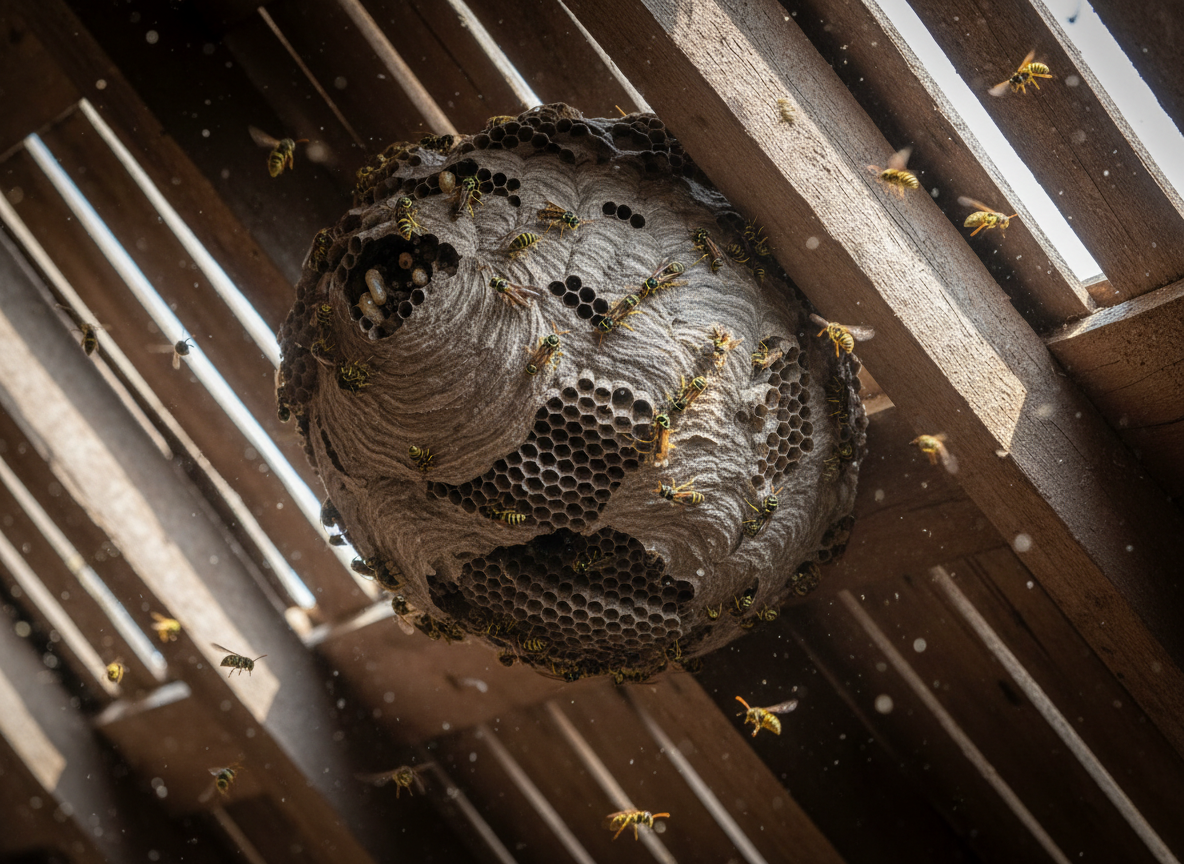
Discovering a wasp nest at your home or business can be alarming — especially if it's in a high-traffic area or somewhere your children or pets spend time. Wasp nest season in Crawley and across West Sussex typically runs from late spring through to autumn, peaking in July and August when nests can contain thousands of workers. Here's a clear, step-by-step guide on what to do (and what not to do) if you find a wasp nest.
Quick summary: what to do if you find a wasp nest
- Stay calm and keep your distance
- Note the nest location and how active it is
- Do NOT try to remove or block it yourself
- Call a professional pest controller
- Follow the aftercare advice provided
Step 1: Stay calm and keep your distance
Wasps are defensive insects — they won't attack unless they feel threatened. If you've spotted a wasp nest, move away calmly and slowly. Avoid swatting at wasps near the nest, making sudden movements, or blocking the flight path to the nest entrance. Vibrations from nearby power tools or lawnmowers can also trigger defensive behaviour. The key is not to disturb the nest.
Step 2: Identify the wasp nest location
Before calling a pest controller for wasp nest removal, it helps to note:
- ✓Where the nest is located (loft, soffit, shed, garden, wall cavity etc.)
- ✓How accessible it is (can you see it clearly, or is it hidden?)
- ✓How active it is (lots of wasps flying in and out, or just a few?)
- ✓Whether it's near a door, window or area people use regularly
This information helps a wasp nest removal specialist prepare the right equipment and treatment approach before arriving at your property in Crawley or West Sussex.
Step 3: Do NOT try to remove the wasp nest yourself
This is the most important point. Attempting to remove or block a wasp nest without professional training and protective equipment is dangerous. Common mistakes homeowners make include:
- ✗Blocking the nest entrance — this traps wasps inside and makes them aggressive
- ✗Pouring water on the nest — this doesn't kill wasps and will provoke an attack
- ✗Using a broom or stick to knock the nest down — extremely dangerous
- ✗Using shop-bought wasp killer incorrectly — can be ineffective and provoke the colony
- ✗Sealing the soffit or vent while the nest is active — wasps will find another exit route
A wasp nest in summer can contain thousands of wasps. A disturbed colony can cause multiple stings in seconds — which can be life-threatening for anyone with a wasp allergy. Never attempt DIY wasp nest removal.
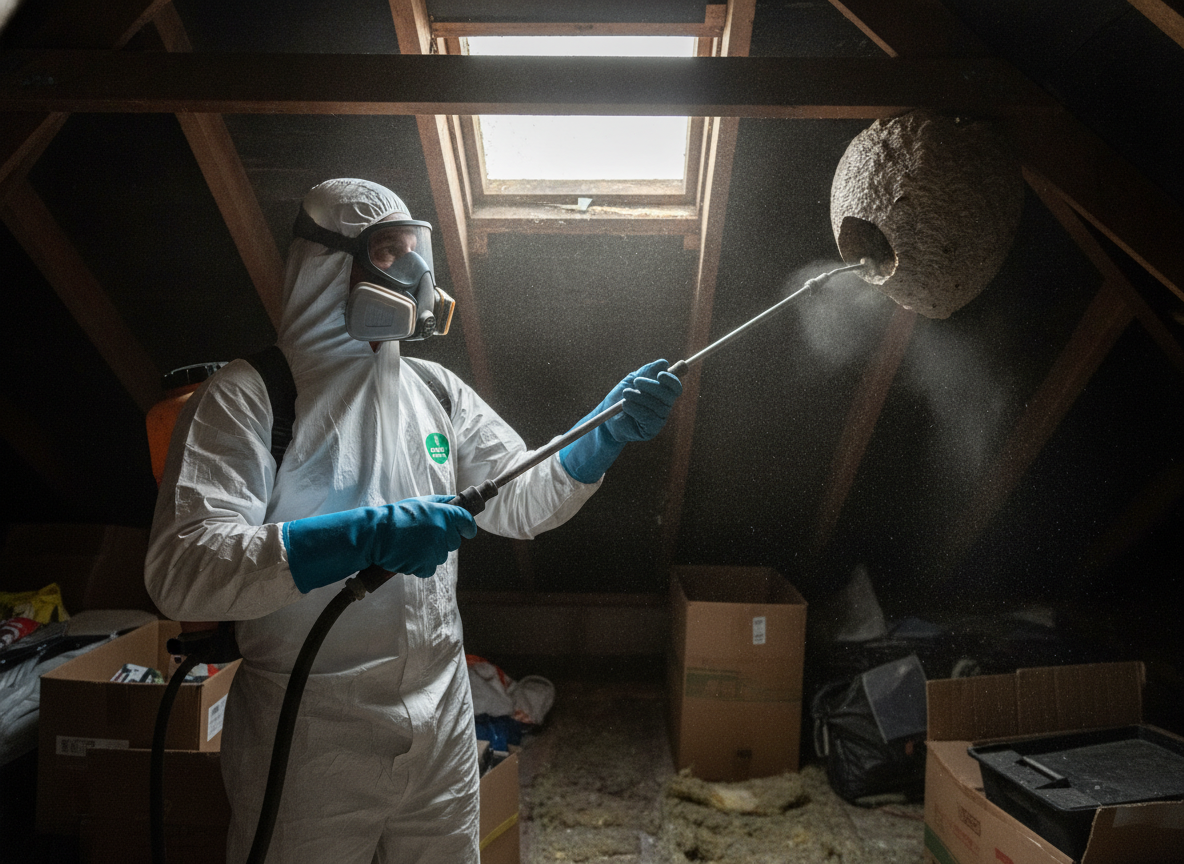
Professional wasp nest treatment requires protective equipment and specialist insecticide — never attempt DIY removal
Step 4: Call a professional wasp nest removal specialist
Professional wasp nest treatment is fast, safe and effective. A qualified pest controller will:
- ✓Locate and assess the wasp nest
- ✓Apply professional-grade insecticide directly to the nest
- ✓Provide clear guidance on re-entry times and safety
- ✓Advise on preventing wasps from nesting in the same spot next year
Most wasp nests can be treated in a single visit. The nest will die off naturally over the following days — you don't usually need to physically remove it. PestSeal provides wasp nest removal across Crawley, Horsham, Redhill, Reigate, Horley, Gatwick and the surrounding West Sussex and Surrey area, with weekend appointments available.
Do I need to remove the wasp nest after treatment?
In most cases, no. Once treated, the wasp nest will die off and wasps won't return to it. The papery nest structure will deteriorate over time. If it's in a visible location and you'd prefer it removed, your pest controller can advise on the safest time to do so — usually a few days after treatment when all activity has stopped.
Will wasps come back to the same spot next year?
Wasps don't reuse old nests — each spring, new queens build fresh nests from scratch. However, they may choose the same location if it's sheltered and accessible. Sealing gaps around soffits, fascias, air bricks and vents after wasp nest treatment can help reduce the chance of this happening. This is part of the prevention-first approach PestSeal takes with every wasp nest removal job.
Common wasp nest locations in Crawley & West Sussex
In Crawley and across West Sussex, the most common wasp nest locations include:
- ✓Loft spaces and roof voids
- ✓Soffits and fascia boards
- ✓Wall cavities
- ✓Garden sheds and outbuildings
- ✓Under decking
- ✓In hedgerows or garden borders (ground-level nests)
- ✓Air bricks and ventilation gaps
Found a wasp nest in Crawley or West Sussex?
PestSeal provides fast, professional wasp nest removal across Crawley, Horsham, Redhill, Reigate, Horley, Gatwick and surrounding areas. Weekend appointments available. BPCA qualified. 10 years' experience.